 Triple Threat Boxing
People ask me all the time, "How long until I actually know what I'm doing?" The honest answer: a month of consistent training changes how you move. Not fight-ready, but you'll stand, punch and defend like someone who's been taught. Here's how I build that first month.
Week 1: Stance, guard and balance
Everything starts with your feet. If your stance is wrong, every punch after it is wrong too. Week one is about finding a stance you can hold while moving.
- Feet about shoulder-width apart, lead foot toward the target, rear heel slightly up
- Hands up, chin down, elbows in
- Small steps forward, back and side to side without crossing your feet
Between sessions: five minutes a day stepping in front of a mirror. Boring? Yes. It's also the fastest way to get better.
Week 2: The jab
The jab is the most important punch in boxing. It measures distance, sets up everything else and keeps people off you. We'll throw a lot of them — on the mitts, on the bag and in the air.
- Snap it straight out and bring it straight back to your face
- Step with it: jab-step in, jab-step out
- Keep the other hand home, guarding your chin
Between sessions: two or three rounds of shadowboxing with only the jab and footwork.
Week 3: Defense
Defense is what lets you box with confidence. We start slow and controlled: catching shots on the gloves, parrying the jab, slipping to the outside. The goal is to keep your eyes open and stay calm.
- Catch and parry before you learn to slip
- Breathe — tension makes you slow
- Defense first, then answer back with a jab
No sparring here. Defense drills happen with me and the mitts, at a pace you can handle.
Week 4: Putting it together
Now we connect the pieces: the 1-2 (jab-cross), simple three-punch combinations, and moving after you punch so you're never standing still in front of someone. Mitt rounds start to feel like real boxing.
- Jab-cross, jab-cross-hook
- Punch, then move: step out or angle off
- Defend, then counter
How often should you train?
Once a week works. Twice a week is where most people see the biggest jump, because you're not relearning last week's cues. Ten or fifteen minutes of homework between sessions makes each hour count double. That's why packages are the best value — see pricing.
What month two looks like
After four weeks we build on what's working: more combinations, better footwork, conditioning rounds, and — only if you want it — a slow, controlled path toward sparring. Some people never spar, and that's completely fine.
Ready to start? Train at Osorio Training Center in Hayward or book mobile sessions in Oakland, San Francisco and across the East Bay. Here's what your first session looks like.
Ready to train?
Private lessons at Osorio Training Center in Hayward or mobile across the Bay Area. Beginners welcome — gloves and wraps provided.
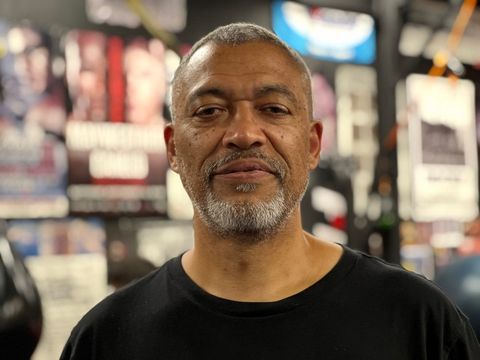
Jamal Valdez-Allen is Head Coach of Triple Threat Boxing with 30 years of experience coaching beginners, youth, amateur champions and professional fighters in the Bay Area. More about Jamal